

While America Fights Iran, China Is Learning How to Beat Us
“Everyone is watching the missiles over Iran, but I’m watching who’s watching us.”
That distinction matters more than most people realize. The strikes, the intercepts, the carrier movements: all of that dominates the news cycle and the briefing slides. But while the world focuses on the fight itself, there is another layer to this that very few people are tracking with the seriousness it deserves. China is watching everything we do.
Not casually. Not passively. Across every domain, in space, air, sea, undersea, logistics, and the information environment. China is building a detailed, layered picture of how America fights.
What platforms we use, in what sequence, at what ranges, with what sustainment, and with what vulnerabilities. They are not watching Iran. They are watching us operate against Iran, and they are cataloging every observable data point for one purpose: to understand how to defeat the United States in a future conflict over Taiwan.
A lot of people are playing checkers when they need to be playing 3D chess. I talk to general officers in the fight. I talk to intelligence community professionals who are watching in real time. And I can tell you that while many are focused on the immediate operational picture, and rightfully so, very few are looking at this the way it needs to be looked at.
Some people are focused on the Iran piece. Some can step back and assess how the conflict affects the broader Middle East or the global economy. But very few are looking forward to seeing how China is diagnosing, harvesting, and collecting this information to use against us in a future scenario.
That is what this post is about. We are going to peel back the layers of the onion: space, air, sea, undersea, logistics, influence, and walk through what China is observing, what they have already learned, and what the United States needs to do about it right now. Not after the fight concludes.
Why This Matters Now, Not After the Fight
This is not a post-conflict lessons learned exercise. This is not something we study after the dust settles and write a paper about for the next war college seminar. China is harvesting data right now, in real time, while US forces are actively engaged. And the window to act on that reality is not later – it’s today.
I want to be clear about something. This is not about panic. It is about urgency. There is a difference, and the difference matters. Panic leads to reactive, unfocused action. Urgency leads to deliberate preparation, informed adaptation, and proactive shaping of the environment before a crisis forces your hand. What I am describing here requires urgency across operational, strategic, and public domains because you cannot wait until moments of crisis to be prepared. You must prepare in all these categories in advance.
What makes this moment different from 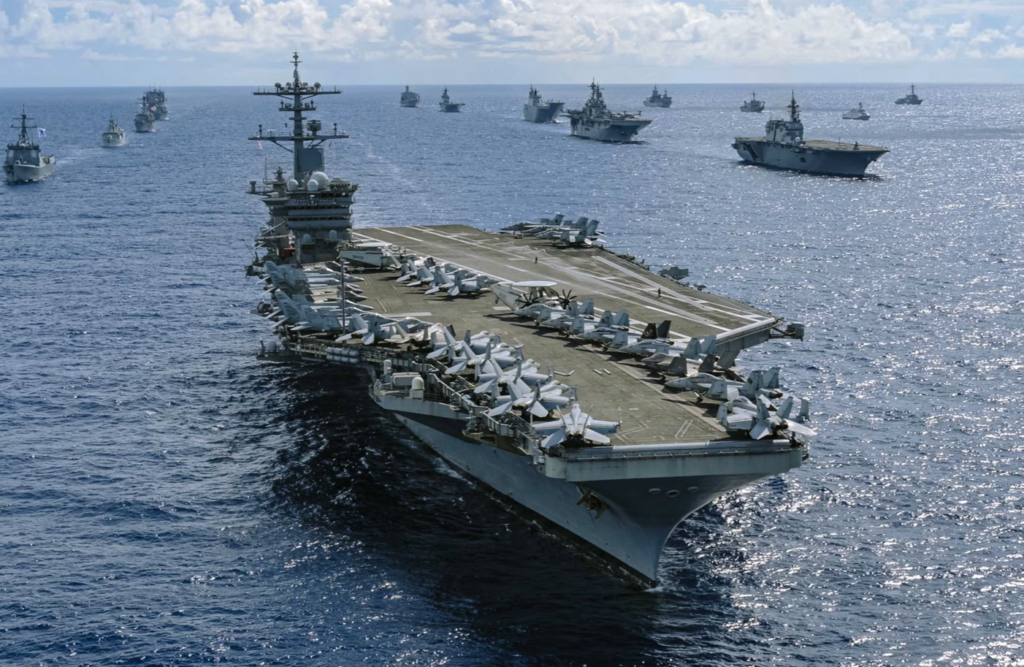 historical intelligence collection is the combination of factors working simultaneously. Adversaries have always tried to observe how the United States fights. That is not new. What is new is the sensor density, the speed of processing, and the fact that we are the ones creating the observable event. Every sortie, every carrier repositioning, every satellite pass, every defensive intercept, every logistics flow – it’s all generating data that Chinese collection systems are ingesting across multiple domains at the same time.
That data is not sitting in a filing cabinet waiting for an analyst. It is going into AI systems that can diagnose patterns, identify sequences, map timing, and model vulnerabilities at a speed and scale that no previous adversary has been able to achieve.
The raw collection of tactical and sequential data (how we layer an air campaign, how we position carriers, how our satellites align with strike timing, how our logistics sustain the fight) allows adversary AI to build a diagnostic picture of US methods and vulnerabilities that would have taken years to assemble through traditional intelligence means. China is getting that picture compressed into weeks and months because we are running a live, observable operation at scale.
That is why the time to change patterns, run deception operations, and shape the observable information environment is right now. Not after action reviews. Not in the next planning cycle.
What China Is Watching From Space
Space is where this starts, and it is where China has made some of its most deliberate investments in observation.
The United States has used satellites extensively in the fight against Iran. They have imagery intelligence, signals intelligence, battle damage assessment, and other collection and offensive capabilities, including GPS spoofing. All of that requires satellite coverage packages operating on predictable orbits and timing windows. And China knows it.
China has done something that not enough people are paying attention to. They have positioned satellites (both military and commercial) stacked above US satellites in the same orbital paths. What that means is that when a US satellite is conducting signals intelligence, or enabling GPS spoofing, or providing coverage for a strike window, Chinese satellites are sitting on top of that position, observing.
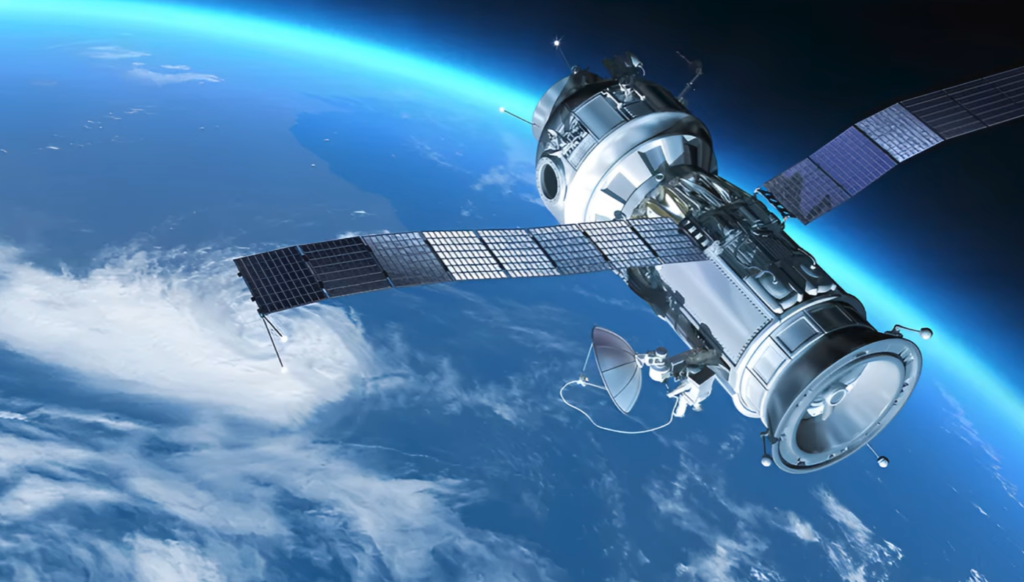 They are watching the order in which our satellites operate. They are watching coverage timing across LEO, MEO, and GEO orbits. They are mapping how satellite activity aligns with air operations below, which tells them when an operation is about to happen, what coverage packages support it, and how command and control communications link the space layer to the fight.
And it is not just military satellites. China has access to a full commercial satellite array that sells imagery and data on the open market. They can fuse commercial collection with what their own military platforms are harvesting to build a layered, continuous picture of US space operations that no single source would reveal on its own.
But observation is only half of what China is doing in space. They have also built what I describe as a three-tier system designed to degrade US space capabilities. They are not just watching how we use space, but they are also actively developing the means to deny it. The Iran conflict gives them the diagnostic data to refine those degradation methods against the specific systems, orbits, and communication links the US is actually relying on in a live fight.
That is the piece that should concern planners most. China is not theorizing about US space architecture. They are observing it perform under operational conditions and calibrating their countermeasures accordingly.
What China Is Watching in the Air Campaign
The air domain is where the US shows its hand most visibly, and China is reading every card. The sequencing of the air campaign follows a pattern that experienced planners recognize. F-35s and F-22s go in first, paired with Tomahawk cruise missiles, to suppress and destroy integrated air defense systems.
Once air superiority is established, follow-on platforms arrive: F-15s, Eagles, and eventually conventional bombers, including B-2s. That phasing from stealth and standoff suppression to air superiority to conventional strike is a layered architecture that reflects how the US has fought for decades. And China is watching every phase of it unfold in real time.
They are tracking sortie rates, such as the number of combat flights generated per day. They are observing flight times and the ranges 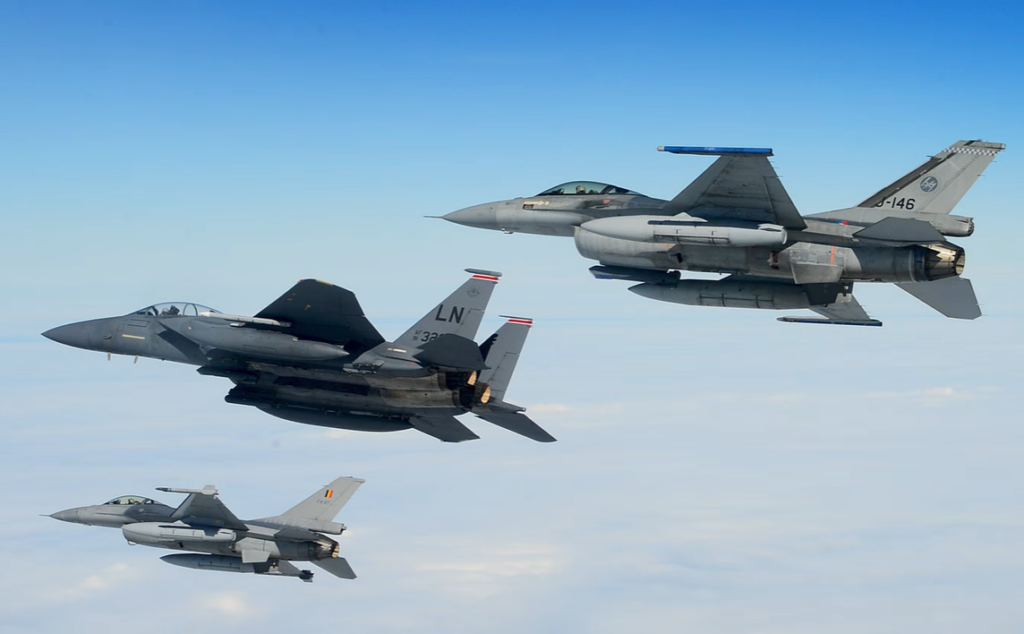 at which US aircraft operate from their bases and carriers. They are watching refueler operations: where tankers launch from, how they are protected, and what timing cycles they follow. They are noting carrier standoff distances, how far the carrier groups position themselves from the threat to balance survivability against sortie generation. Every one of these data points tells Chinese planners something specific about US operational patterns, and about the constraints those patterns impose.
On the defensive side, China is observing how the US intercepts inbound threats. Patriot systems. THAAD. Aegis. Helios. They are watching which systems engage which threats, how many interceptors are fired per inbound, and what the ammunition expenditure rates look like. That tells them not just what our defensive architecture looks like on paper, but how it performs under sustained operational pressure and how quickly it depletes.
And behind all of it, they are watching the logistics that feed the platforms. The supply chains that sustain carrier-based aviation. The munitions replenishment cycles. The fuel and maintenance throughput that determines whether the US can keep fighting at this tempo for days, weeks, or months.
All of this observational data (sequencing, timing, ranges, sortie rates, defensive responses, logistics flows) is going into an AI brain to diagnose how the United States fights. Not in theory. Not from doctrine manuals. From live operations, observed across every domain simultaneously. That is what makes this different from anything that has come before.
Sea, Undersea, and Logistics
The coverage of sea, undersea, and logistics observation is shorter in scope but no less important in implication.
At sea, China is monitoring carrier group positioning and logistics. Where the carrier groups station themselves relative to the fight. What standoff distances do they maintain? How logistics vessels resupply the platforms that generate combat power. Every repositioning, every replenishment cycle, every observable movement of the carrier group tells Chinese naval planners something about how the US Navy manages risk and sustains operations in a contested maritime environment.
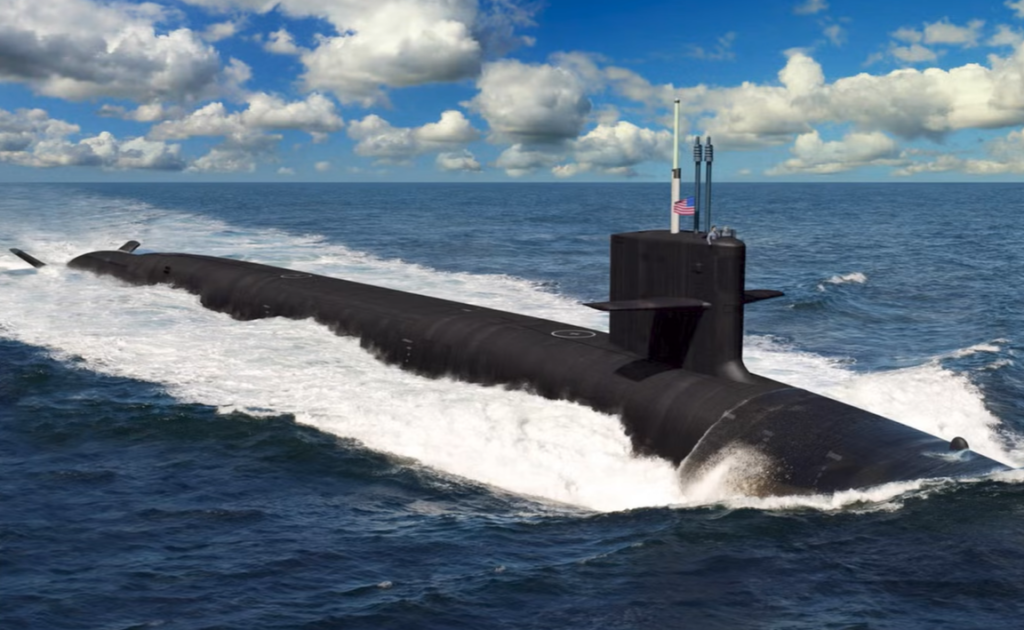 Below the surface, China is using submersibles to collect data on US undersea operations. The specifics of what they are collecting are sensitive, but the fact that they are present and actively harvesting undersea data during a live US operation is itself a significant indicator of how seriously Beijing is treating this as a collection opportunity.
The logistics and sustainment piece is where all of this connects to the Taiwan scenario most directly. China is not just observing US combat capability. They are also observing the tail that makes that capability sustainable. Sustainment requirements. Logistics throughput. The supply chains that keep air and sea platforms operational over time. What they are trying to determine is how long the United States can actually maintain a major theater commitment at this operational tempo, and where the pressure points are that could shorten that timeline.
For Chinese planners looking at a Taiwan contingency, that sustainment picture may be more valuable than any single platform observation, because it tells them how to outlast rather than outfight the US military.
What China Has Already Learned
Here is the data point that should travel farthest from this post.
Most intelligence assessments before the Iran conflict assessed that China would feel it was ready, not that it would necessarily act, but that it would assess its own readiness to take action against Taiwan by the fall of 2027. Based on what China has observed during the Iran conflict, that timeline has shifted.
Their own systems (hypersonic weapons, radar, anti-aircraft systems, and other Chinese-origin capabilities that Iran has been employing) have revealed performance gaps that Beijing did not fully appreciate before seeing them tested in a live combat environment. My assessment is that the earliest China would now feel confident in its readiness is the fall of 2028, at least twelve months beyond the previous estimate.
I want to be precise about what I 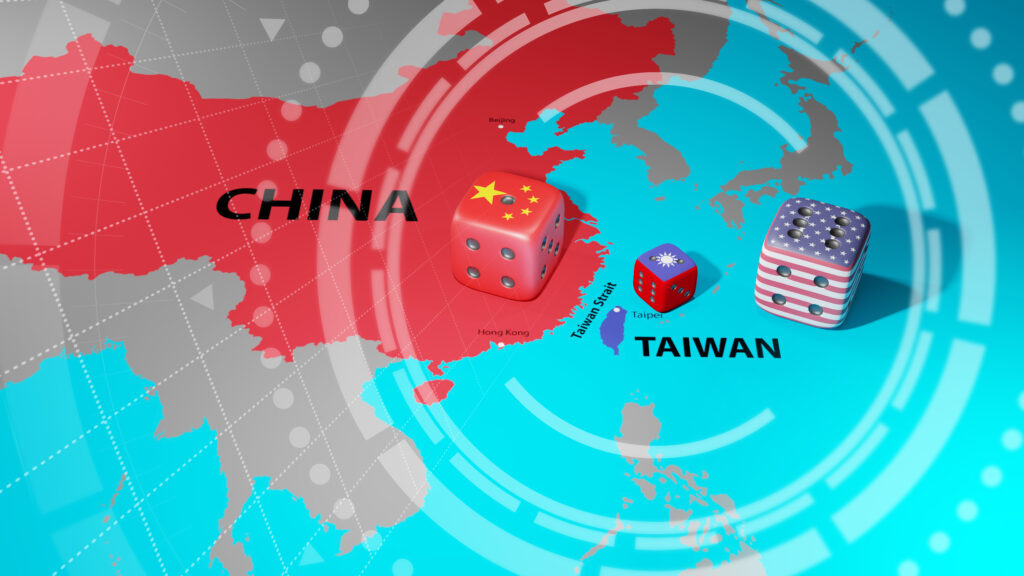 am saying and what I am not saying. I am not predicting that China will take action against Taiwan in the fall of 2028. I am assessing that this is the earliest point at which Chinese leadership would feel they have addressed the gaps this conflict has exposed. Those are two different statements, and the distinction matters for planning purposes.
The second-order effect is equally important. China is not just adjusting a timeline. They are going back to re-evaluate and upgrade their own systems based on what they have harvested. Their hypersonics. Their anti-aircraft weapons. Their space systems. Their command and control protections.
Every vulnerability they observed in their own exported technology is now being fed into their domestic upgrade cycle. And every vulnerability they observed in US systems is being cataloged for exploitation. The observation is not a passive exercise. It produces active capability improvement on the Chinese side, and that improvement is happening now.
What the United States Needs to Do Now
The operational implication of everything above is straightforward: the United States needs to change patterns now, not later.
 Deception operations need to be planned and executed while the Iran conflict is still generating observable data. If China is harvesting raw information about how we sequence, sustain, and defend, then the counter is to shape what they observe. Send the message you want to send. Do not let them just harvest the raw data.
Information operations need to account for the fact that China is building not just a military picture but an influence picture. Their ability to affect our center of gravity (the American people) is something they have studied for decades. Since Vietnam, since Ho Chi Minh attacked America’s center of gravity with the Tet Offensive and changed the dynamic of the war by shifting public perception, adversaries have understood that US political will is a targetable vulnerability.
China will use the observational data from this conflict to design information and influence campaigns aimed at that same center of gravity. Preparing to counter that has to start now, not when those campaigns begin to surface.
Operational security has to account for the fact that the sensor density and AI processing available to Chinese intelligence means that patterns which might have been acceptable in previous conflicts are now exploitable. Sortie timing, logistics cycles, satellite coverage windows, all of these generate signatures that are being diagnosed in near-real time. Changing those patterns is not optional. It is an operational necessity for any planner thinking beyond the current fight.
And all of this must be proactive. You cannot wait until moments of crisis to be prepared. You must prepare across operational, strategic, and public domains in advance because the adversary is already doing the work on their end.
The Shot China Doesn’t Need to Take
I want you to remember one thing. China does not need to fire a single shot in the Iran conflict. All they need to do is observe, put that data to good use, and they will advance years in their assessment of how to take on the United States of America. If we do not understand that they are doing this and we do not act now, we will pay for it later.
i3CA + i3solutions combines strategic geopolitical expertise with enterprise-grade technical execution to support organizations in building decision-support platforms, operational intelligence frameworks, and integrated analytic environments designed for great power competition.
If your organization needs support integrating adversary observation analysis into theater planning, deception strategy, or operational security frameworks, reach out to me at tony.thacker@i3solutions.com.
1 comment on “While America Fights Iran, China Is Learning How to Beat Us”
Kelli’s test comment